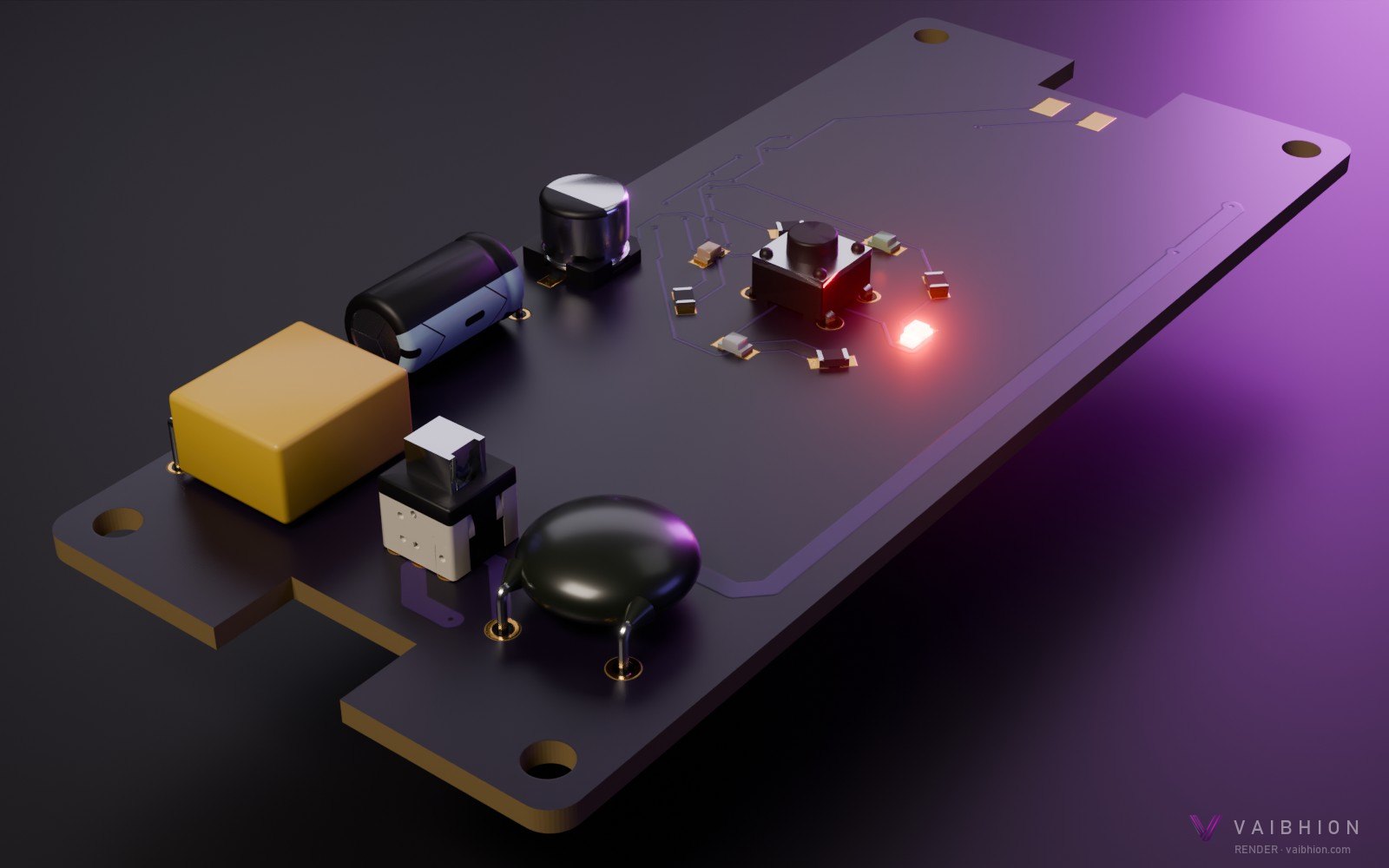
Live 3D from the real layout. Drag to turn it, flip it, pull it apart, or press the button on the board.
Heat controller for a therapy belt
A heated therapy belt needed a brain: one button, three heat levels and standby, running straight from the wall socket. We designed the board, found what was wrong with the first build, and fixed all of it in the second.
The brief
The client makes heated therapy belts and wanted a digital controller for them. One button steps through standby and three heat levels, a light shows each level, and a switch locks it. It had to run directly from the mains, stay cool and safe inside a small sealed housing, and be cheap to build in volume.
Rev 0 taught us. Rev 1 fixed it.
Ran warm
The power section turned too much energy into heat, inside a sealed box that already sits next to a heater.
A cooler power stage
We re-sized the power section for what the board really draws, so far less energy is wasted as heat.
Slow to build
14 through-hole parts meant hand soldering on every unit: slow, costly and harder to keep consistent.
Made for machines
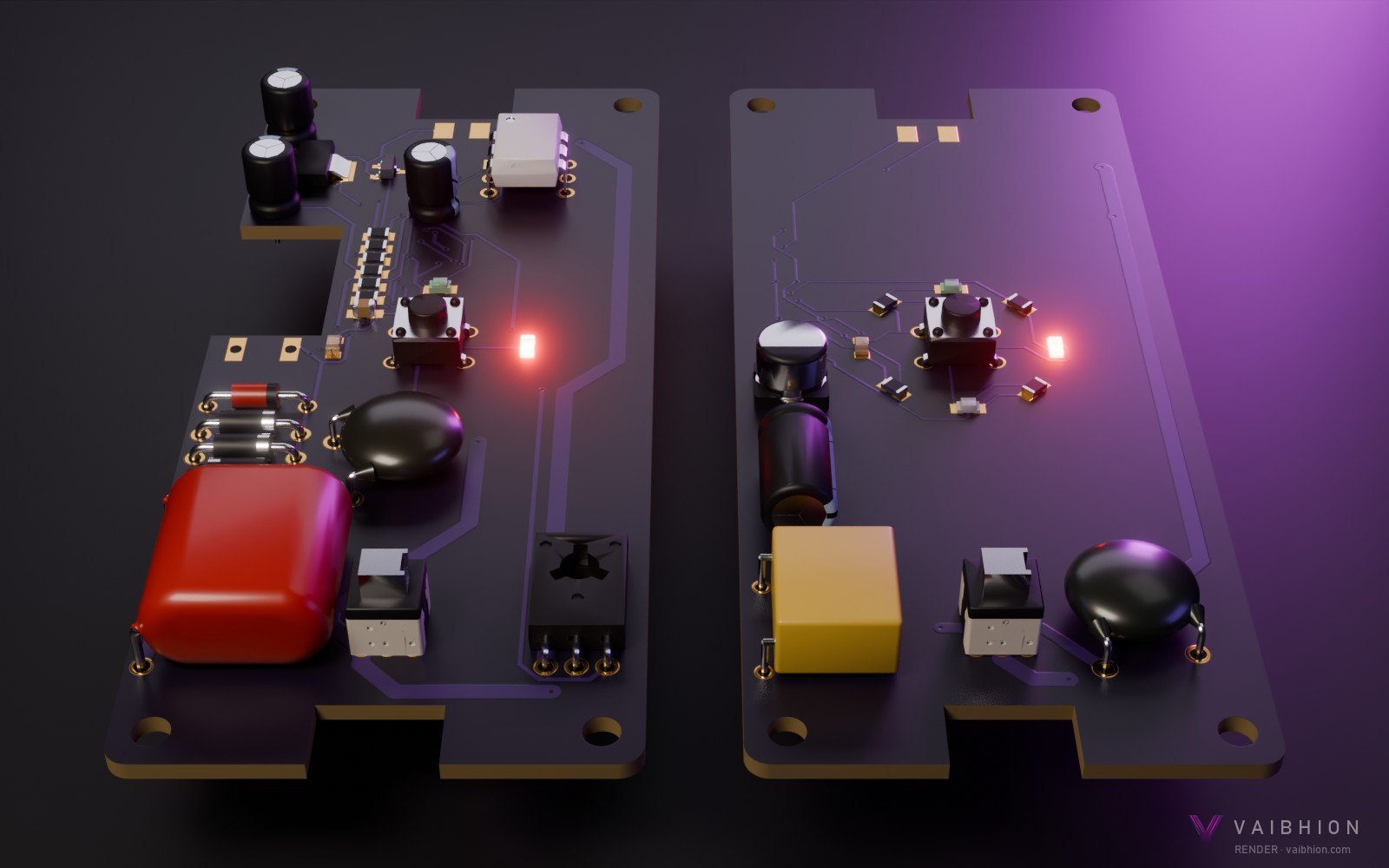
Almost everything moved to surface-mount parts that a machine can place. Only 5 through-hole parts are left, each one there for a reason.
A tight fit
Bulky through-hole parts crowded the front and took up much of the board, so it did not sit cleanly in its housing.
Clean front, busy back
The button, its four lights and the lock switch now own the front. The electronics moved to the back, and the tall parts are laid flat, so the board sits low in its housing.
Gentler switching
The heater is now switched in step with the mains, which is easier on the heater and puts less electrical noise back on the line.
What we did
- Circuit design and part selection for a mains-powered controller
- Two-layer layout: the front for the user, the back for the electronics
- A second revision that fixed heat, build time and fit
- A parts list ready for machine assembly
- Photoreal renders and this live 3D view of both revisions
Result
Rev 1 was built, tested and handed over to the client. It keeps the same outline as rev 0, with 5 fewer parts and 9 fewer to solder by hand.
Renders
Board colours are our showcase finish. Part numbers, values and the client's name stay private, as they do for every client.